TSA PreCheck 2027: Enroll, Renew, and Stop Overpaying
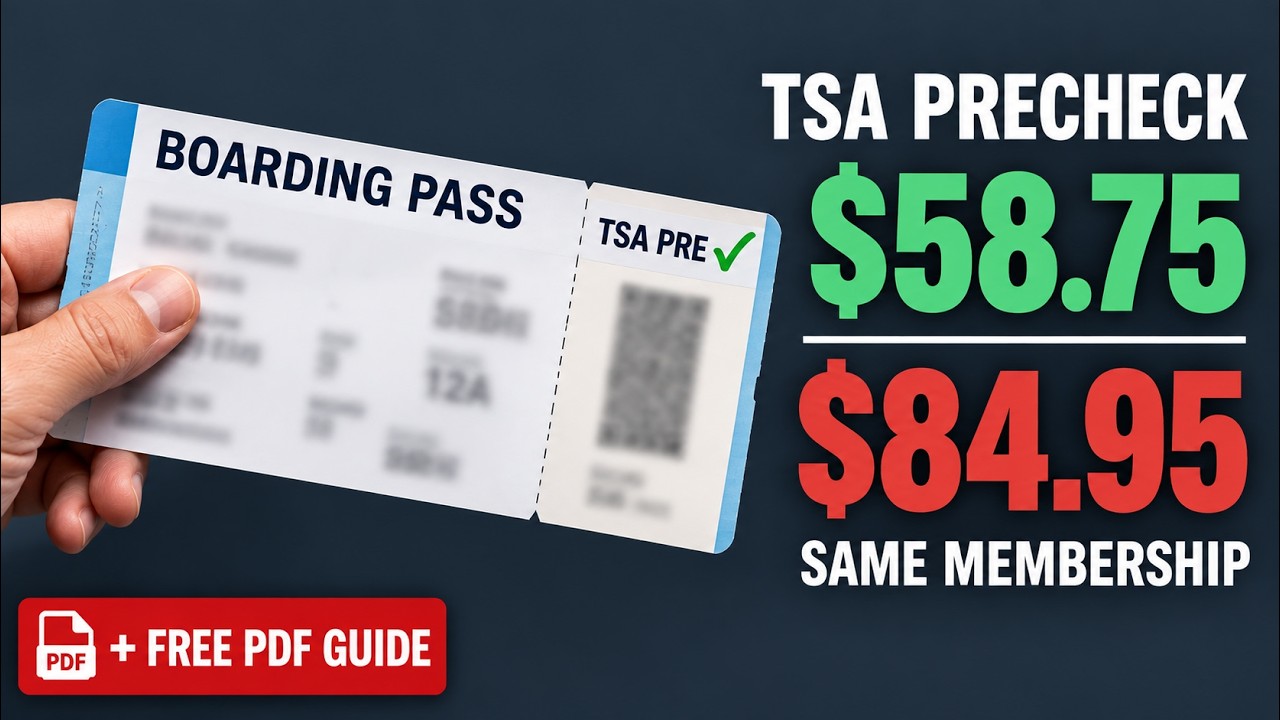
Your TSA PreCheck renewal notice leaves out the most useful thing about it: the price is not fixed anymore. Three separate companies now run enrollment, and each one sets its own fee. The same five-year membership ranges from $58.75 to $84.95 depending on who you buy it from and whether you renew online or in person. Most people never see that gap, because they click the link they were sent. Here is what TSA PreCheck actually costs in 2027, and how to avoid paying the top price.
What changed, and why it matters
For years the Transportation Security Administration set one price for everyone. The last flat rate was $78. That ended when TSA authorized additional enrollment providers. Telos became the second provider in August 2023 and CLEAR the third in April 2024. TSA still decides who is eligible and still runs the vetting. What it stopped doing was setting one price.
One naming quirk is worth knowing before you start. TSA lists one provider as IDEMIA, but its consumer enrollment operation is branded IDENTOGO, and its centers, website and paperwork all say IDENTOGO. They are the same company.
The full TSA PreCheck price table for 2027
| Provider | New enrollment | Renewal online | Renewal in person |
|---|---|---|---|
| IDEMIA (IDENTOGO) | $76.75 | $58.75 | $66.75 |
| Telos | $85.00 | $69.95 | $58.75 |
| CLEAR | $84.95 | $72.95 | $84.95 |
Two things stand out. The cheapest renewal and the most expensive are more than $26 apart for exactly the same thing. And Telos is the exception to the rule everyone assumes: it charges less in person than online, so renewing online with Telos costs you $11.20 more than driving to a center.
One more thing about that table. The online versus in person split applies to renewals only. Every new enrollment requires an in-person appointment for identity documents and fingerprints, whichever provider you pick. The online part is just the application form.
What the CLEAR Plus offer actually costs
CLEAR advertises a free TSA PreCheck renewal when you join CLEAR Plus. Here is the actual mechanism. You complete your renewal and pay CLEAR’s fee. CLEAR then issues a one-time code that lets you join CLEAR Plus for $146 rather than its usual price. You have now paid for two products.
CLEAR Plus is a separate, privately run identity service. It is not part of TSA PreCheck and it is not a government program. If you already wanted CLEAR Plus, the credit is real and you come out ahead. If you only want PreCheck, a standalone renewal at IDEMIA costs $58.75, and the CLEAR Plus route costs you the renewal fee plus $146 on top.
Who can apply
Direct enrollment is limited to United States citizens, United States nationals and lawful permanent residents. If you hold a temporary visa you cannot apply through the three providers, but that is a limit on this specific program rather than on expedited screening generally. U.S. Customs and Border Protection runs Trusted Traveler Programs that accept a wider range of nationalities, including Global Entry, NEXUS and SENTRI. Approval in any of those assigns a PASS ID that works as a Known Traveler Number with participating airlines.
Certain criminal offenses disqualify you, and the timing matters. A few bar you permanently no matter how long ago they happened. Most of the rest reach back seven years from a conviction, or five years from release if you served time. Either window can catch you, so do not assume an old conviction is automatically cleared.
Children and teenagers
This is where families get caught out. Children aged 12 and under can walk into the PreCheck lane with an enrolled parent or guardian, and nothing needs to appear on their boarding pass. Teenagers aged 13 to 17 are treated differently: the PreCheck indicator has to print on their own boarding pass, and that only happens when they are booked on the same reservation as the enrolled adult. Book them separately and they get the standard lane while the rest of the family walks through.
Leave the Known Traveler Number field blank on a child’s booking. Putting your own number there is a violation, and it stops the indicator printing rather than making it appear.
The step that decides whether you get the lane
Your membership does not follow you around. Your Known Traveler Number has to go into the KTN field of every reservation you book with a participating airline. No number in that field means no indicator on the boarding pass, which means you stand in the standard lane whether you hold a membership or not. Store it in your frequent flyer profile so it populates automatically, then check it anyway.
Timing matters more than it sounds. What counts is your membership status on the day you fly, not the day you booked. You can renew up to six months before expiry, and renewing early costs you nothing because the new term begins when the current one ends. TSA recommends renewing at least 60 days out, because some applications go to extended review and can take up to 60 days rather than the usual three to five.
Free if you serve
Active duty service members pay nothing. Enter the ten-digit Department of Defense identification number from the back of your Common Access Card into the Known Traveler Number field when you book. There is no application, no appointment and no fee, and no opt-in step for uniformed members. Defense Department civilian employees are the exception and must opt in first.
One warning, because it strands people at the checkpoint: showing your Common Access Card to the officer does not get you into the lane. The officer reads your boarding pass, not your card. If the number was not in the booking before the pass was generated, the indicator is not there.
Five mistakes that cost people money or time
- Leaving the Known Traveler Number out of a booking. People pay, get approved, feel finished, and never complete the last step.
- A name mismatch. Your reservation has to match your enrollment record, so a maiden name on one and a married name on the other breaks it.
- Letting the membership lapse. Once it expires you are a new applicant again, at the higher new-enrollment price, with a new in-person appointment.
- Assuming the link in the renewal email is the only option. It goes to whichever provider you used last time, and it may cost you $26 more.
- Booking a teenager on a separate reservation, which quietly removes their access and splits the family at security.
Related guides
If you are weighing the two programs, our guide to TSA PreCheck versus Global Entry covers which one actually suits how you travel. If your Global Entry is the membership coming up for renewal, read how to renew Global Entry without losing TSA PreCheck. And for arrivals rather than departures, Mobile Passport Control is free and gets overlooked.
Download the free guide
Everything above plus the full six-cell price table, the permanent and seven-year disqualifier lists, the enrollment location counts and a printable checklist. Free, and no email required.
Browse every guide we publish on the Free Guides page.