Social Security Overpayments? Do THIS Now
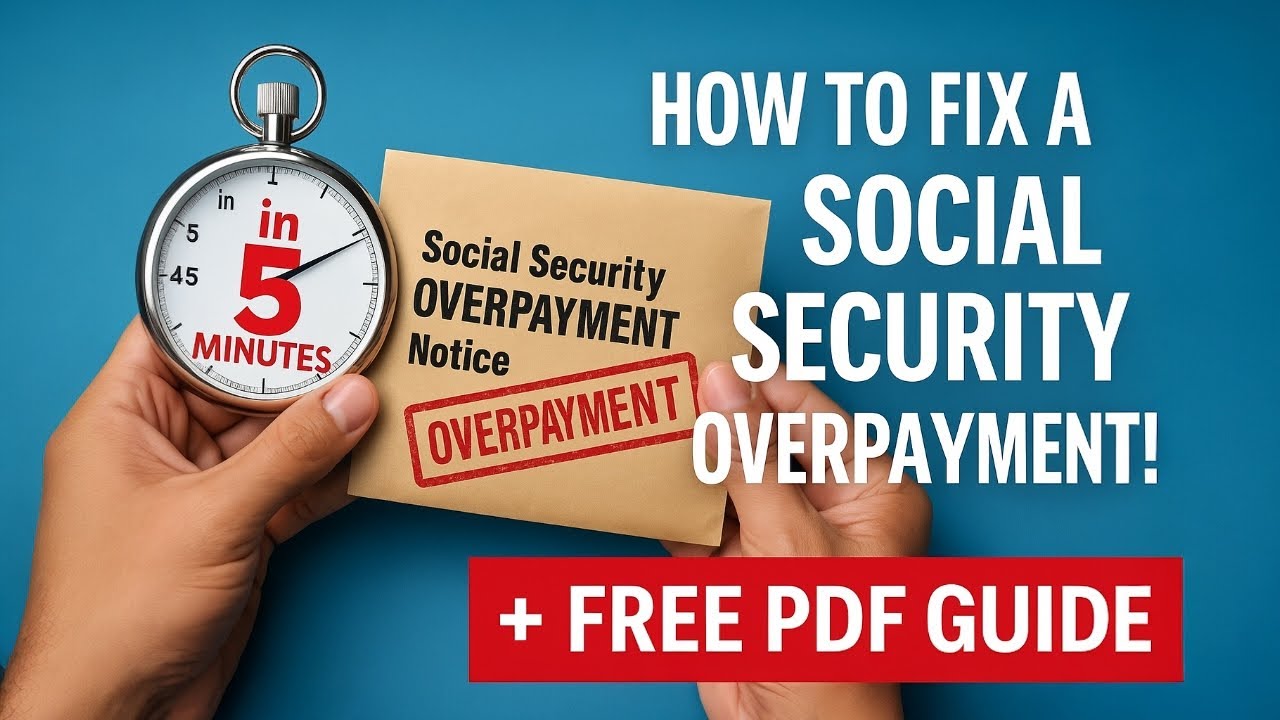
A Social Security overpayment notice comes with two different clocks. You have 60 days to appeal, but collection starts after just 30 days, plus the 5 days Social Security assumes for mail. File within that 30 day window and collection stops until a decision is made. Miss it and they begin withholding while you wait. Doing nothing is the worst option of all.
Watch this step-by-step GovClarity video guide. Subscribe to our YouTube channel for new guides every week.
Information sourced as of July 2025. The deadlines, forms and withholding rates below were current when this guide was published and match our companion PDF. Confirm current rules at ssa.gov before you file.
The clock that matters most
You have 60 days to appeal. But collection starts after just 30 days, plus 5 days that Social Security assumes for mail.
File within that 30 day window and collection stops until a decision is made on your request. Miss it and they begin withholding while you wait.
Doing nothing is the worst option. It leads to automatic withholding of 10% of your monthly benefit, or $10, whichever is greater.
What a Social Security overpayment notice means
When Social Security decides it paid you more than you were entitled to, it sends an overpayment notice. Common causes are unreported income, a change in living situation, administrative error on their side, or any other change affecting your eligibility or payment amount.
A notice is not proof you did anything wrong. A meaningful share of overpayments come from processing errors, including changes that were reported on time but never recorded.
If you ignore it, collection can go well beyond benefit withholding. It can include intercepting your tax refund, garnishing wages, and reporting the debt to credit bureaus.
Your three options
| Option | Use it when | Deadline | You must show |
|---|---|---|---|
| Appeal | You believe the overpayment is wrong | Within 60 days of receipt | Proof the determination is incorrect |
| Waiver | It is correct, but not your fault and you cannot afford it | Any time | That you were without fault, plus hardship or unfairness |
| Payment plan | You agree, but need time | Any time | Ability to make at least small payments |
Which one fits you
Appeal if the amount is wrong, you never received the benefits in question, their information about your situation is incorrect, you reported changes on time but they were not processed, or the calculation period is wrong.
Waiver if the overpayment was not your fault and you cannot repay without hardship, or it would simply be unfair to make you repay because you changed your financial position relying on that money.
Payment plan if you accept the overpayment, can pay over time, and want to avoid more aggressive collection.
You are not locked in. If an appeal fails you can still request a waiver.
How to appeal
- Gather your documentation: the overpayment notice, proof of when you actually received it if that differs from the notice date, any evidence the determination is wrong, records of your communications with Social Security, and income and resource documents for the period in question.
- Complete Form SSA-561, Request for Reconsideration, from ssa.gov or your local office. Tick the box showing you disagree, explain clearly why, and be specific about dates, amounts and facts. Attach copies, never originals.
- Submit it online at ssa.gov, which is fastest, or by post to the address on your notice, by fax to the number given, or in person. You can also call 1-800-772-1213 for help.
- Keep proof of submission, whether a confirmation number, certified mail receipt or fax confirmation, plus a complete copy of everything you sent.
If you are currently receiving benefits, you can ask for them to continue unchanged during the appeal, but you must request that within 10 days of receiving the notice. Be aware that if the appeal fails you may have to repay those continued payments too.
How to request a waiver
A waiver requires proving two things, not one.
First, that you were without fault. That means you reported all required information on time, you did not provide false information, you returned any payment you knew was not due to you, and you did not know and could not reasonably have known you were being overpaid.
Second, one of these: that repayment would cause financial hardship, meaning you could not meet basic needs, or that repayment would be “against equity and good conscience.”
What “against equity and good conscience” actually means
This is the criterion most people never use, and it is powerful. It applies when you changed your position for the worse in reliance on the payments, such as making major purchases or irreversible financial decisions, or signing commitments you would not otherwise have signed.
It also applies when you gave up a valuable right, for example declining other benefits you were eligible for, or not pursuing other income, because your Social Security payments appeared sufficient.
Imagine you signed a twelve month lease based on the benefit amount you were receiving, and breaking it now would cost you penalties. That is exactly the argument this criterion exists for. Say so plainly, give the dates and amounts, and attach the lease.
The paperwork
Complete Form SSA-632-BK, Request for Waiver of Overpayment Recovery, from ssa.gov. Fill in every section, particularly income and expenses. Explain why it was not your fault, and why repayment would cause hardship or be unfair.
Document your finances with papers dated within the last three months: pay stubs or benefit statements, rent or mortgage statements, utility bills, medical expenses, food and transport costs, insurance premiums, and any other necessary expenses.
What to put in your letter
Head it with your name, address, phone number and the date, then the subject line, your Social Security number and the date on the overpayment notice.
For an appeal, state the date and amount you are appealing, then give the specific reason. That might be that you reported the change on a particular date by a particular method and it was not processed correctly, that the calculation is wrong and your records show a different figure, or that the underlying information is simply incorrect. List every document you have attached, and ask for benefits to continue during the appeal.
For a waiver, state the amount and notice date, then set out why you were without fault, followed by either your hardship, with your monthly income against your necessary expenses, or your equity and good conscience argument. Confirm you have completed Form SSA-632-BK and list your attachments.
Specific dates, specific amounts and attached proof do the work here. Vague statements do not.
Get free help
Legal aid organisations handle these cases regularly and cost nothing if you qualify on income. Find one at lawhelp.org. If you are 60 or over, your local Area Agency on Aging can also help.
If your benefits themselves are in dispute rather than an overpayment, see our guides on appealing an SSDI denial and correcting your earnings record.
📥 Free PDF Guide
Download our free step-by-step guide for this topic. No email required.
Browse all our guides on the Free Guides page.
Frequently asked questions
How long do I have to respond?
You have 60 days to appeal, but collection begins after 30 days plus 5 mail days. Filing within that 30 day window pauses collection until a decision is made.
What happens if I do nothing?
Social Security withholds 10% of your monthly benefit, or $10, whichever is greater. Collection can also extend to tax refund interception, wage garnishment and credit bureau reporting.
What is the difference between an appeal and a waiver?
An appeal argues the overpayment is wrong. A waiver accepts it is correct but asks to be released from repaying, because it was not your fault and repaying would cause hardship or be unfair.
Can I keep receiving benefits while I appeal?
Yes, if you request it within 10 days of receiving the notice. If the appeal fails you may have to repay those payments as well.
Which forms do I need?
Form SSA-561 for an appeal, and Form SSA-632-BK for a waiver. Both are at ssa.gov.
Is there a deadline for a waiver?
No. A waiver can be requested at any time, including after an appeal has been denied.
Can I get help with this?
Yes, and it is free. Legal aid organisations at lawhelp.org handle overpayment cases, and Area Agencies on Aging assist people 60 and over.
Related GovClarity guides
- How to Apply for Social Security Benefits in 2025: Complete Guide in Under 5 Minutes
- Social Security Card Replacement 2027: The Number and the 45 Day Clock
- Replace Your Social Security Card Online (2026 Guide)
Official resources
- Forms and online filing: ssa.gov
- Social Security: 1-800-772-1213, TTY 1-800-325-0778, Monday to Friday 8:00 AM to 7:00 PM local time
- Office locator: ssa.gov/locator
- Free legal help: lawhelp.org
Details as of July 2025. Deadlines and procedures change, so verify at ssa.gov. GovClarity is not a government agency and does not provide legal advice.