What to Do When a Loved One Dies: A Step-by-Step Guide (2026)
When someone you love dies, the government paperwork starts within days, and no one hands you a checklist. There is no single form or website that notifies every agency. One report to Social Security also reaches Medicare, but everything else falls to the family, and the order you do it in matters. This guide walks you through exactly what to do when a loved one dies, step by step, so you do not miss a benefit your family is owed or get a letter demanding money back.
When a loved one dies, start with certified death certificates
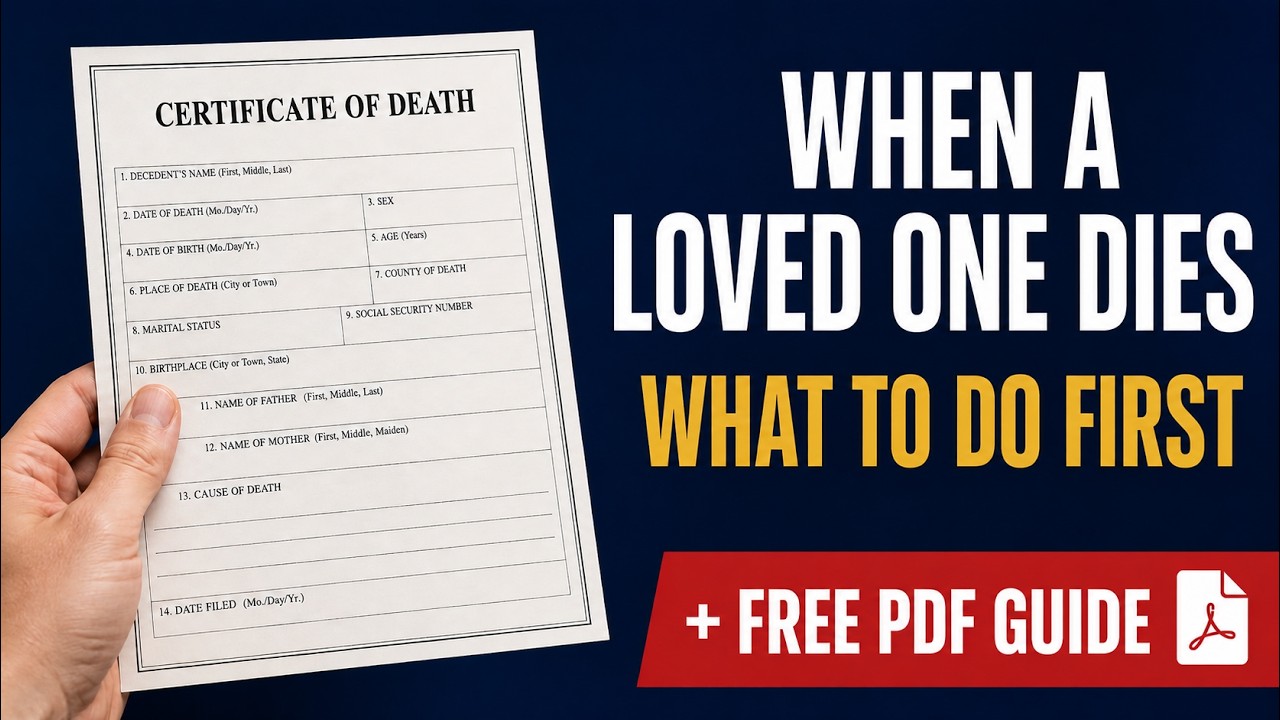
The death certificate is the one document that ties this whole process together. Almost every agency, bank, and insurance company will ask for a certified copy, not a photocopy, from your state or county vital records office. Order more than you think you need. We suggest around 10, because families who order two or three often end up waiting weeks for more, right when they need to move fast.
Social Security: the payment you must return, and the $255 benefit
Usually the funeral home reports the death to Social Security, which also notifies Medicare. Here is the trap: Social Security pays a month behind, and no benefit is due for the month a person dies. So the payment that arrives after the death, covering that final month, has to be returned. If someone passes in July, it is the payment that arrives in August that goes back. Do not spend it. There is also a one-time $255 death benefit a surviving spouse or eligible child can claim, but you must apply within two years.
Survivor benefits are not automatic
Reporting a death does not start survivor benefits. For most families you have to apply, and you cannot apply online, only by phone or at a Social Security office. There is also a timing strategy that can mean a much larger monthly check for the rest of your life. We cover it in our Social Security Survivor Benefits guide.
Veterans, taxes, and the pensions families forget
If the person served, the VA may help with burial costs and a plot allowance, plus an ongoing monthly benefit called Dependency and Indemnity Compensation (DIC) and, for some families, a Survivors Pension. The IRS still expects a final tax return, and Form 1310 is often needed to claim a refund. Federal retirees, military retirees, and railroad workers each have separate survivor benefits through OPM, DFAS, and the Railroad Retirement Board. If you are also navigating a hard situation involving an incarcerated family member, see our Loved One in Federal Prison guide.
Download the free step-by-step guide
Our free companion guide puts every form number, phone line, deadline, and current dollar amount in one place, along with the order to handle everything. No email required.
Explore more free walkthroughs on our Free Government Guides page.
Official source: Social Security Administration, ssa.gov