SSDI Denied? How to Appeal in 2026 (Step-by-Step + Free Guide)
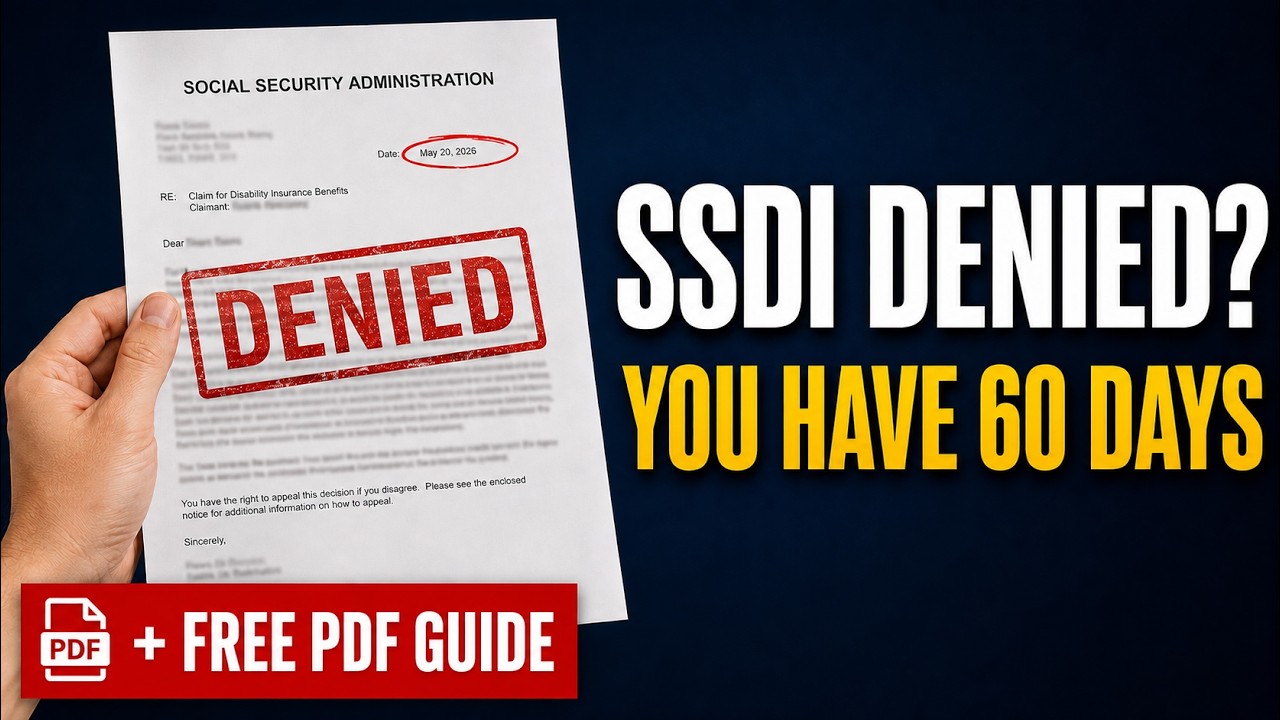
Your SSDI claim was denied, and that letter matters more than you think. Only about one in five disabled-worker applicants are approved on their first application, and about a third of everyone who eventually gets approved got there by appealing. In our latest video, we walk through exactly how to appeal an SSDI denial in 2026, and why the worst thing you can do right now is start over.
You Have 60 Days, and the Clock Is Already Running
Your appeal window is 60 days from the day you receive the denial notice, and Social Security presumes that’s 5 days after the date printed on the letter. That deadline applies at every level of appeal, all the way up. Miss it, and the decision generally becomes final. Late appeals are only accepted with proven good cause. Date on the letter, plus 5 days, plus 60: write that date down.
First, Understand Why You Were Denied
Your denial letter tells you which of two very different problems you have. A medical denial means Social Security decided your condition doesn’t meet their definition of disability. A technical denial means you never reached the medical question, usually not enough work credits, or earnings above the substantial gainful activity limit while your claim was pending. The fix for one does nothing for the other, so identify your denial type before you file anything.
How to Appeal an SSDI Denial: The Four Levels
- Reconsideration : a fresh review by a different examiner and medical consultant, started with Forms SSA-561 and SSA-3441. Most reconsiderations are denied, but it’s the required doorway to the level that matters.
- Hearing before an Administrative Law Judge , requested with Form HA-501. For the first time, a person hears your story, and judges approve about half the cases they hear. As of mid-2026, SSA reports claimants waiting under nine months on average for a decision.
- Appeals Council review , Form HA-520. The Council checks whether the judge followed the rules, not whether you’re disabled.
- Federal court : a civil action in U.S. District Court, the only level with a filing fee.
Appealing inside Social Security is free at every administrative level.
What a Representative Really Costs
Most disability representatives work on contingency, no win no fee, under a fee agreement capped at 25% of your back pay or $9,200, whichever is less. But that cap only applies to the standard fee-agreement process, and out-of-pocket costs like medical records fees are separate. Our free guide breaks down all four fee arrangements before you sign anything.
The Mistake That Forfeits Your Back Pay
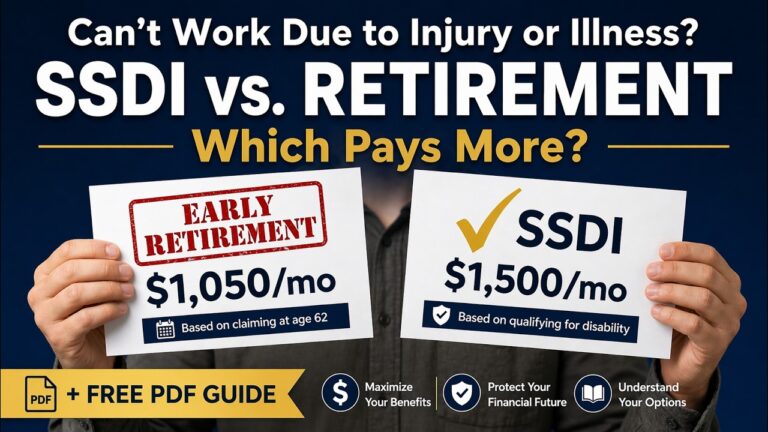
Filing a brand-new application instead of appealing feels natural, because they said no, so you try again. But a new application risks giving up your original filing date and the months (sometimes years) of back pay building since you first applied. For most people, in most situations: appeal, don’t restart. If you haven’t applied yet, start with our SSDI application guide . And if you’re near retirement age and weighing your options, see SSDI vs. Social Security Retirement.
Download the Complete Free Guide
Everything we covered, plus the details there wasn’t time for in the video: the full good-cause rules for late appeals, the 5-business-day evidence rule, federal court costs and fee waivers, the reopening rules that can rescue a lost filing date, and a complete appeal checklist. No email required.
Browse all our free government guides for more plain-language walkthroughs.
This article is educational and not legal advice. Always verify current rules at ssa.gov.