FEMA Help: Your Step-by-Step Disaster Relief Guide (In Under 5 Minutes)
Set your expectations correctly before you apply. FEMA assistance is not insurance and will not make you whole. It helps with essential needs that insurance does not cover, and it is a starting point for recovery rather than a replacement for what you lost. You have 60 days from the disaster declaration to apply, and if you have insurance, file that claim first.
Watch this step-by-step GovClarity video guide. Subscribe to our YouTube channel for new guides every week.
Information sourced as of January 2025, verified against FEMA guidance from March 2025. These match our companion PDF. Maximum assistance amounts and programme details change regularly, so always confirm current limits at FEMA.gov before making decisions.
Set your expectations correctly first
FEMA is not insurance and will not make you whole. It helps with essential needs that insurance does not cover. It is a starting point for recovery, not a replacement for what you lost.
You have 60 days from the disaster declaration to apply. Extensions are sometimes granted, but apply as early as you can.
If you have insurance, file that claim first. FEMA cannot duplicate insurance benefits, but it can help with what your policy does not cover.
What FEMA actually provides
The Federal Emergency Management Agency helps individuals and households affected by federally declared disasters through its Individuals and Households Program. Assistance comes as grants that do not have to be repaid, but eligibility rules and documentation requirements are strict.
It splits into two broad categories. Housing Assistance covers temporary housing, home repairs, home replacement and permanent or semi permanent construction. Other Needs Assistance covers medical, dental and funeral expenses, personal property, transportation, childcare, and moving and storage.
| Type | What it covers | Requirement |
|---|---|---|
| Housing | Temporary housing, repairs, replacement | Your primary residence was damaged |
| Personal property | Essential household items, appliances, work tools | Documented loss |
| Medical and dental | Disaster caused medical costs | Not covered by insurance |
| Funeral | Disaster caused funeral and burial costs | Not covered by insurance |
| Childcare | Increased childcare costs caused by the disaster | Documented need |
| Moving and storage | Relocating or storing property to prevent damage | Disaster related |
| Clean up and removal | Removing disaster caused damage | Health or safety hazard |
| Transportation | Repairing or replacing a damaged vehicle | Your primary transport, limited to one vehicle |
Realistic timelines and amounts
| Application window | 60 days from the disaster declaration |
| Initial decision | 2 to 3 weeks on average, longer during major disasters |
| Home inspection | Typically within 10 days of applying |
| Temporary housing | Up to 18 months in most cases, with extensions possible |
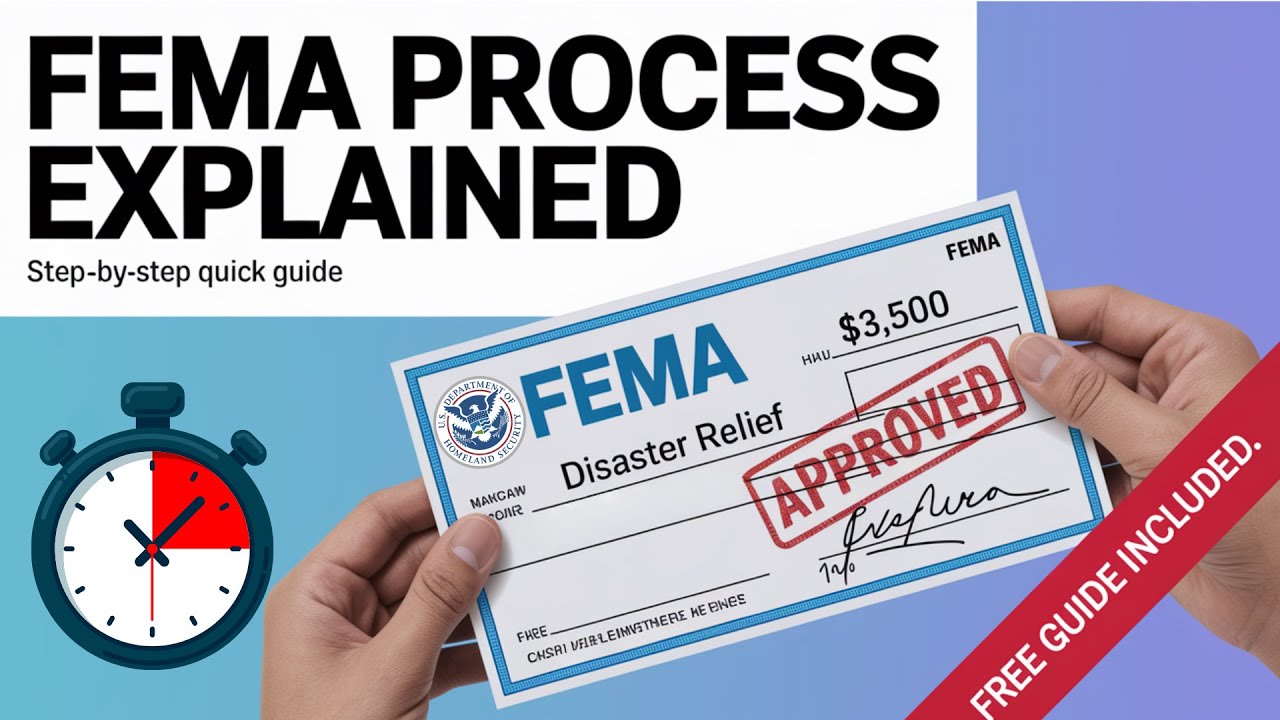
| Typical award | $3,000 to $10,000, varying widely by documented need |
Most recipients receive substantially less than the maximum. Awards are based on documented needs not covered by insurance, not on the total value of what you lost. Knowing that in advance prevents a second, avoidable shock.
Do you qualify for FEMA assistance?
Status. You need to be a United States citizen, a non citizen national from American Samoa or Swains Island, or a qualified alien, which includes lawful permanent residents, asylees and refugees. A household can also apply through a minor child who is a citizen, non citizen national or qualified alien, which matters for mixed status families.
Property. It must be your primary residence, meaning where you live more than six months of the year. Vacation homes do not qualify. It must sit inside the geographic area named in the Presidential Disaster Declaration, and the damage must affect essential living space or critical personal property.
Insurance. FEMA covers gaps, not duplicates. File your insurance claim first and keep the denial or settlement letter, because you will need it.
FEMA verifies your identity through government databases, your ownership or occupancy through utility bills and tax records, and your insurance status through your policy documents and claim correspondence.
What to gather
- Identity: government issued photo identification. A birth certificate or military identification is sometimes accepted, and for non citizens, valid immigration documentation.
- Social Security number: at least one household member needs a valid one. A card, tax form or pay stub showing the full unmasked number works.
- Occupancy or ownership: a deed, mortgage statement or property tax receipt, utility bills from the last three months, a signed lease, or rent receipts.
- Insurance: every relevant policy, claim numbers and adjuster contacts, settlement or denial letters, and declaration pages showing limits and deductibles.
- Damage: dated photographs or video, a full list of damaged or lost items with values, written estimates from licensed contractors, and receipts for emergency repairs you have already made.
- Financial: bank routing and account numbers for direct deposit, pre disaster income documentation, and current monthly expenses.
Photograph everything before you clean up. Once debris is cleared, the evidence is gone, and undocumented damage is difficult to claim.
How to apply
First, confirm a declaration covers you. Check FEMA.gov/disasters, call the helpline on 1-800-621-3362, watch local government announcements, or contact your local emergency management office.
| Method | Notes |
|---|---|
| Online at DisasterAssistance.gov | Available at any time and fastest, but needs internet access |
| The FEMA mobile app | Same speed, convenient, needs a data connection |
| Phone on 1-800-621-3362 | Personal help, no internet needed, but waits can be long |
| Disaster Recovery Center or post | Face to face help, though post is the slowest route |
How the declaration process works
Understanding this explains why help feels slow. Local government responds first and documents damage. When local resources are overwhelmed, the state or tribal government asks for federal assistance. FEMA then assesses the damage. The President approves or denies a declaration. Only once it is approved and a disaster number assigned does the application period open for individuals.
You cannot apply before a declaration exists for your area, however severe your own losses are.
If you are denied
A denial is frequently a documentation problem rather than a final answer. Missing proof of occupancy, an unresolved insurance claim, or damage that was not documented before clean up are all common causes and all fixable. Read the letter for the specific reason, gather what is missing, and appeal within the stated deadline.
📥 Free PDF Guide
Download our free step-by-step guide for this topic. No email required.
Browse all our guides on the Free Guides page.
Frequently asked questions
How long do I have to apply?
60 days from the date of the disaster declaration. Extensions are sometimes granted, but do not rely on one.
How much will I get?
Typically $3,000 to $10,000, based on documented needs insurance does not cover. Most people receive well below the maximum, because FEMA covers essential needs rather than full replacement.
Do I have to pay it back?
No. FEMA assistance is generally a grant. Disaster loans from the Small Business Administration are separate and do have to be repaid.
Can I apply if I have insurance?
Yes, and you should. File your insurance claim first. FEMA can help with uninsured or underinsured losses but will not duplicate what insurance pays.
Can renters apply?
Yes. Renters qualify for personal property loss and temporary housing. Bring your lease or rent receipts as proof of occupancy.
What if my home is a vacation property?
It does not qualify. Assistance is limited to your primary residence, where you live more than six months of the year.
How soon is the inspection?
Usually within 10 days of applying, though it depends on the scale of the disaster and inspector availability.
Related GovClarity guides
- FAFSA 2026-2027: Avoid Mistakes That Cost Thousands
- How to Apply for WIC in 2025: Step-by-Step Guide
- How to Apply for LIHEAP: Winter Heating Help 2025
- Can’t Afford Groceries? How to Get Up to $975/Month in SNAP Benefits (2025 Guide)
Official resources
- Apply: DisasterAssistance.gov
- FEMA helpline: 1-800-621-3362, TTY 1-800-462-7585
- Check declarations: FEMA.gov/disasters
- Disaster Distress Helpline: 1-800-985-5990, available 24 hours
Details as of January 2025, verified against March 2025 FEMA guidance. Assistance limits and programme rules change regularly, so verify at FEMA.gov. GovClarity is not a government agency and cannot process applications.