How to Get a US Passport in 2026: New Rules & Online Renewal
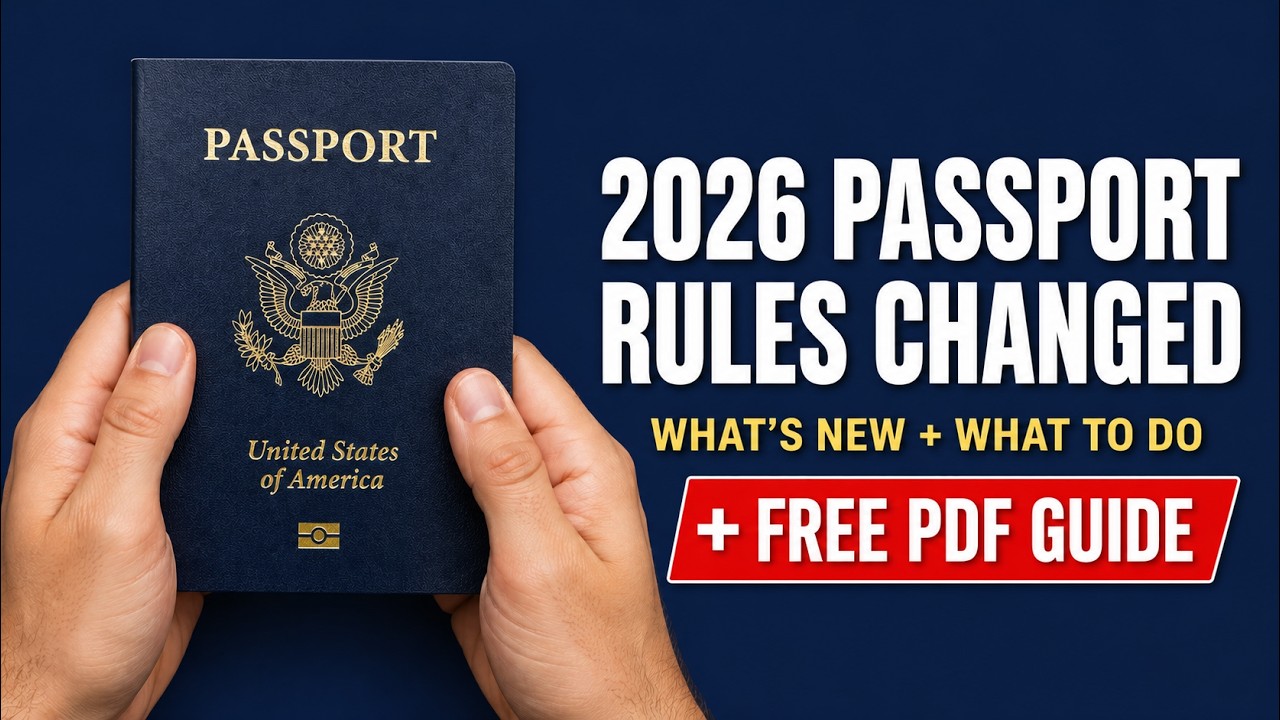
Knowing how to get a US passport in 2026 is trickier than it was even a year ago. Between the full rollout of the online renewal system and the surge in demand following the REAL ID deadline, the landscape has shifted significantly. If you apply the “old way” without understanding these new shifts, you risk long delays, rejected applications, or missing your travel dates entirely.
The State Department has introduced strict new rules, particularly regarding AI-enhanced photos, and streamlined digital options that can either save you weeks of time or cause a major headache if used incorrectly. This guide breaks down everything you need to know to navigate the US passport process in 2026, from hidden fees to the specific “buckets” every applicant falls into.
How to Get a US Passport: What Changed in 2026
Several factors have converged to make this a record-breaking year for passport agencies. First, the REAL ID enforcement that kicked in last May means millions of Americans whose driver’s licenses are not compliant are now using passport books or cards just to fly domestically within the United States. This has pushed agency lines to their longest levels in years.
Second, the State Department has officially cracked down on digital alterations. They now explicitly ban passport photos edited with computer software, phone apps, filters, or AI tools. This means the “perfect” photo you snap on your smartphone might be the very reason your application gets rejected.
However, it’s not all bad news. For those who qualify, the online renewal system is finally fully operational, offering a faster path than the traditional mail-in route, provided you know the rules.
Step 1: Identify Your “Application Bucket”
Before you fill out a single form, you must determine which category you fall into. In 2026, every applicant fits into one of three buckets, and choosing the wrong one will result in an immediate setback.
Bucket 1: First-Time Applicants
You belong in this group if you have never had a US passport, your last passport expired more than 15 years ago, or your previous passport was issued when you were a child. You must apply in person using Form DS-11.
Bucket 2: Online Renewal Candidates
The new online renewal system (available at opr.travel.state.gov) is the fastest option, but it has strict eligibility requirements. You can only renew online if:
- You are 25 years of age or older.
- Your most recent passport was a 10-year book.
- Your passport is expiring within one year or expired less than five years ago.
- You have not changed your name or other personal information.
- You are currently physically located inside the United States.
- You are not traveling for at least six weeks.
- Your current passport is undamaged.
Bucket 3: Renew by Mail
If you are a renewer but fail even one of the tests for Bucket 2 (for example, you are under 25 or have a name change), you must renew by mail using Form DS-82.
Required Documentation for 2026
Gathering the right documents is where most people face delays. For a successful application, you will need:
- Proof of US Citizenship: Usually a certified long-form birth certificate or your old passport.
- Government Photo ID: A valid driver’s license or state ID.
- Photocopies: A clear photocopy of your ID (front and back) on plain 8.5×11 paper.
- Passport Photo: One color photo taken within the last six months on a plain white background.
A critical note for 2026: The State Department updated its policy regarding sex markers. On your application, the marker (M or F) must match the sex listed on your supporting citizenship document, such as your birth certificate. While the “X” marker option was previously available, it is no longer an option for new applications or renewals in 2026. If you currently have an “X” marker on your passport, it remains valid until it expires, but your next renewal must use M or F.
The New Rules for Passport Photos
The single biggest reason for application rejection in 2026 is the AI and software ban. To ensure your photo is accepted:
- Avoid all filters: Do not use “beauty mode,” auto-enhance, or any phone app filters.
- No AI tools: Do not use AI to remove backgrounds or sharpen the image.
- Plain Camera Only: If taking the photo at home, use the default camera app with all enhancements turned off.
- Background: The background must be plain white with no shadows.
Pro Tip: To be safe, many experts recommend using a professional passport photo service rather than a smartphone to avoid accidental “auto-enhancements” built into modern phone software.
The Real Cost of a Passport in 2026
- Adult Passport Book: $130 application fee.
- First-Time/In-Person Execution Fee: $35 (added to the $130 for a total of $165).
- Child’s Passport (Under 16): $100 application fee + $35 execution fee ($135 total).
- Passport Card: $30 for adults / $15 for children (plus execution fees if in person). The card is only for land/sea travel to Canada, Mexico, and the Caribbean, not flights.
- Expedited Processing: Additional $60.
- 1-3 Day Return Shipping: Additional $22.05.
A first-time adult applicant needing an expedited passport should expect to pay a total of approximately $247.05.
5 Common Mistakes That Cause Delays
- Using AI-Touched Photos: This is currently the leading cause of rejection. Stick to raw, unedited photos.
- Third-Party Websites: Only use official .gov websites. The only official site is travel.state.gov, and the only legitimate online renewal is opr.travel.state.gov.
- Wrong Online Eligibility: If you are under 25, have a name change, or are traveling within six weeks, do not try to force an online application. It will be rejected later.
- Incorrect Birth Certificates: Hospital “souvenir” certificates with footprints are not valid. You need a certified long-form copy from the state vital records office with a raised or embossed seal.
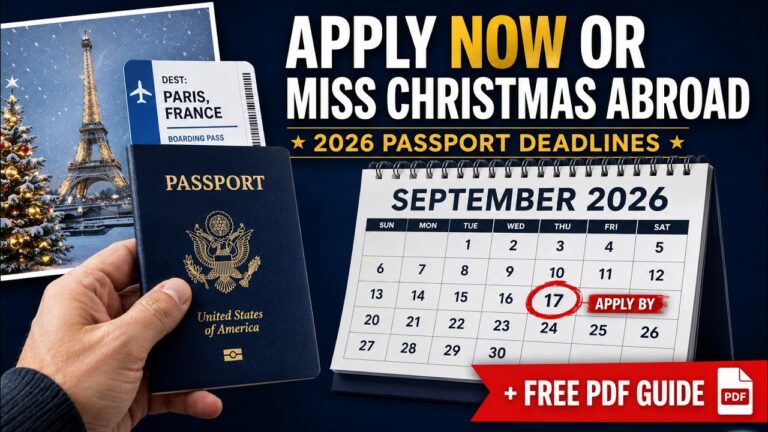
- Underestimating the Timeline: The 4–6 week “routine” window only counts the time the application is at the agency. Adding mailing time on both ends, the actual door-to-door wait is often 8 to 10 weeks.
Related GovClarity Guides
- What to Do If Your Passport Is Lost or Stolen: Before and During Your Trip (2026)
- REAL ID 2026: New TSA Requirements You Must Know
- New Carry-On Rules for 2026: What Every Traveler Needs to Know
Related GovClarity guides
- How to Get a U.S. Passport Fast: Complete Expedited & Emergency Guide 2026
- Getting Your Child’s Passport Fast: 5-Minute Guide
- Passport Name Change 2026: Which Form Do You Need? (Marriage or Divorce)
Download the Free Step-by-Step Guide
Get the full printable guide with the 7 online renewal eligibility rules, the complete 2026 fee table, the realistic door-to-door timeline, and a printable application checklist. No email required, completely free.
Browse all our Free Government Guides for more printable PDFs on travel, taxes, benefits, and more.
Conclusion
Getting your US passport in 2026 requires more attention to detail than in previous years. By identifying your correct “bucket,” following the strict new photo guidelines, and accounting for the true mailing timelines, you can avoid the stress of a rejected application. Plan for at least ten weeks of lead time to ensure your travel plans stay on track.
Frequently Asked Questions
You can renew online at opr.travel.state.gov if you are 25 or older, your most recent passport was a 10-year book, it expires within one year or expired less than five years ago, you have not changed your name, and you are inside the United States.
The State Department officially banned passport photos edited with computer software, phone apps, filters, or AI tools. Use a plain camera with all enhancements turned off, or use a professional passport photo service. AI-touched photos are now the leading cause of rejection.
An adult passport book costs $130, plus a $35 in-person execution fee for first-time applicants, $165 total. Expedited processing adds $60 and 1-3 day return shipping adds $22.05. A first-time adult expedited passport totals approximately $247.05.
The 4-6 week routine processing window only counts agency time. Adding mailing on both ends, the actual door-to-door wait is 8 to 10 weeks. Plan for at least ten weeks of lead time. Expedited processing reduces agency time but still adds shipping.
The passport book ($130 adult) works for all international travel including flights. The passport card ($30 adult) only covers land or sea travel to Canada, Mexico, and the Caribbean. It cannot be used for international flights of any kind.
No. The X marker option is no longer available for new applications or renewals in 2026. Your application must use M or F, matching the sex listed on your supporting citizenship document. Existing X-marker passports remain valid until they expire.
First-time applicants need Form DS-11 (signed at the agency), proof of U.S. citizenship like a certified long-form birth certificate, a valid government photo ID, a clear photocopy of that ID on plain paper, and one color passport photo from the last six months.
The most common rejection causes are AI-enhanced or filtered photos, beauty-mode auto-enhancements, hospital souvenir birth certificates with footprints, and using a third-party non-government website. Always use raw unedited photos and apply only at travel.state.gov or opr.travel.state.gov.