
No Tax on Tips: How to Save Up to $25,000 on Your 2026 Taxes
The new No Tax on Tips rule could save tipped workers thousands of dollars on their 2026 tax return. Under the One Big Beautiful Bill Act, qualifying workers can now deduct up to $25,000 in tip income from federal income tax. A full-time server earning $40,000 in tips could save $3,000 to $4,000 at tax time.
But this isn’t an exemption — it’s a deduction. Your tips still get reported as income. The deduction reduces how much of that income gets taxed. In this video, we break down exactly who qualifies, how much you can save, and how to claim it correctly.
Who Qualifies for the Tip Deduction?
Three things must be true to claim this deduction:
- Your job is on the approved list. The IRS published 68 qualifying job titles across eight categories — from food service and hospitality to personal care, transportation, recreation, entertainment, and home services.
- Your tips must be voluntary. Cash tips, credit card tips, and digital payments like Venmo all count. Automatic service charges and non-cash tips (gift cards, event tickets) do not qualify.
- Your income must be under the phase-out threshold. That’s $150,000 for single filers or $300,000 for joint filers. Above those numbers, the deduction shrinks by $100 for every extra $1,000 you earn.
You must also have a valid Social Security number (an ITIN does not qualify), and married filers must file jointly.
68 Qualifying Occupations Across 8 Categories
The Treasury Department’s approved list covers a wide range of tipped workers:
- Food & Beverage: Servers, bartenders, bussers, barbacks, hosts, cooks, sommeliers
- Hospitality: Bellhops, concierges, hotel desk clerks, housekeeping staff
- Personal Care: Barbers, hairstylists, nail technicians, massage therapists, spa attendants
- Home Services: House cleaners, landscapers, plumbers, electricians, pool cleaners
- Transportation & Delivery: Taxi and rideshare drivers, valets, pizza and grocery delivery workers
- Recreation: Tour guides, golf caddies, ski instructors, fishing charter workers
- Entertainment: Gambling dealers, DJs, lounge singers, digital content creators
- Additional Services: Nannies, tutors, pet caretakers, tattoo artists, movers
Workers in health care, performing arts, athletics, law, accounting, consulting, and financial advisory do not qualify — even if they receive tips.
How to Claim It: Schedule 1-A
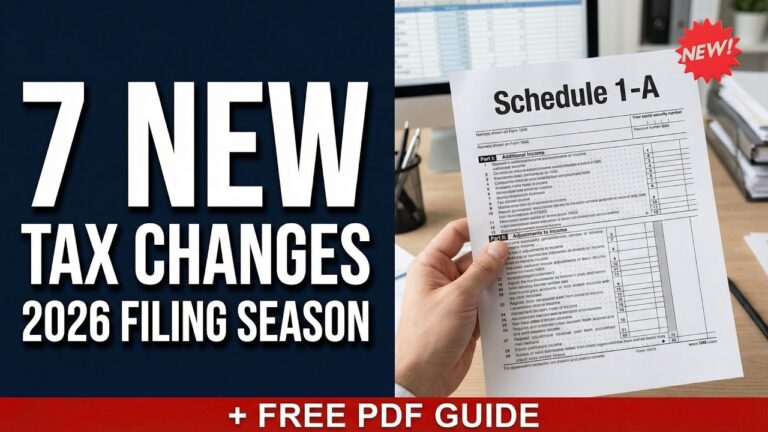
You’ll claim this deduction using the new Schedule 1-A, attached to your Form 1040. Pull your tip amounts from your W-2, 1099, or Form 4137 (for unreported tips), and enter them on Schedule 1-A, Part Two. The form calculates your deduction based on the lesser of your actual tips or the $25,000 cap, then applies the income phase-out.
The $25,000 cap is per return, not per person — if both spouses earn tips and file jointly, you share the cap.
W-2 Changes Coming for 2026
For the current filing season (2025 tax year), employers weren’t required to separately report tip amounts on W-2s, so you may need your own records. Starting with the 2026 tax year, employers must include a new Box 12, Code TP for your qualified tip amount and a Treasury Tipped Occupation Code (TTOC) in Box 14-b. Talk to your employer now to make sure they’re ready.
Common Mistakes to Avoid
- Thinking “no tax on tips” means you stop reporting tips. You must report every dollar. Unreported tips trigger penalties for underreporting income.
- Forgetting payroll taxes still apply. This deduction only covers federal income tax. Social Security and Medicare taxes (7.65%) still apply to every dollar of tips.
- Assuming your industry qualifies instead of your specific job title. A restaurant manager who doesn’t receive tips is not eligible — the deduction is based on occupation, not workplace.
- Not keeping a tip log. Without records, you have nothing to show if the IRS asks questions. Keep a daily log or use IRS Form 4070-A.
Key Details at a Glance
- Maximum deduction: $25,000 per return
- Tax years covered: 2025 through 2028
- Phase-out begins: $150,000 (single) / $300,000 (joint)
- Form required: Schedule 1-A (Form 1040)
- Qualifying occupations: 68 job titles across 8 categories
Download the Free Guide
Our free companion guide includes the complete list of 68 qualifying occupations, a step-by-step Schedule 1-A walkthrough, a printable tip tracking log, plus special rules for self-employed filers and gig workers.
This is Video 2 in our 2026 Tax Changes series. Watch Video 1: 7 New Tax Changes for 2026 for the full overview, and subscribe to GovClarity on YouTube for the next video covering the No Tax on Overtime deduction.